


London, UK – Visual, drag-and-drop development is no longer a novelty – it is fast becoming the default approach for enterprises that need to move quickly without hiring armies of developers.
Instead of writing thousands of lines of code over countless hours, businesses can now create web, mobile and cloud applications through the efficiency of low-code visual modeling.
Against this backdrop, Boston-headquartered AI development platform OutSystems has emerged as a key player in enterprise low-code development. Founded in 2001 in Portugal by entrepreneur Paulo Rosado, the company delivers enterprise-grade solutions that reduce reliance on manual coding, enabling organizations to focus on innovation, customer experience and strategic product development rather than technical complexity.
As demand grows for software that streamlines workflows and supports rapid scaling, the limitations of traditional development models have become increasingly evident. A recent digital transformation report indicates the market is approaching a growth peak, with projections of an 18% compound annual growth rate and a valuation that could exceed $2.5 trillion USD by 2033 – driven by the need for more agile digital capabilities.
More than 84 % of businesses now leverage low-code or no-code platforms to accelerate transformation and ease the burden on IT teams, highlighting the urgent demand for faster, more flexible software delivery.
OutSystems meets this challenge head-on by shortening delivery cycles from months or years to weeks, demonstrating how visual, drag-and-drop low-code can redefine enterprise development.
Low-Code Development Drives Long-Term Enterprise Innovation
While traditional tools operate on handwritten and often fragmented codebases, OutSystems applications built on visual models automatically generate optimized code in the background. This approach makes development significantly more efficient, particularly when considering long-term enterprise impact.
“OutSystems isn’t just a solution — it’s a platform that thinks outside the box, helping businesses move AI applications from pilot to full production efficiently, safely – and at scale,” noted Ben Beasley, Regional Sales Director at OutSystems, while in conversation with 150sec at the CIO UK&I event in London on February 10.
As drag-and-drop software accelerates and simplifies workflows, pressure on scarce technical talent is reduced, while human error declines. At the same time, the approach standardizes development across teams and regions, and supports structured architectural governance — a critical requirement for large organizations.
“Our low-code approach ensures fast development, strong governance, and highly scalable AI,” added Beasley.
Built-in governance and control – including centralized lifecycle management, security controls, automated testing and deployment oversight – play a key role in maintaining data security and regulatory compliance. This, in turn, helps prevent “shadow IT” by keeping development within IT oversight.
In the long run, these safeguards enable multiple teams to collaborate safely, which in turn allows organizations to sustain innovation without increasing risk exposure and protect enterprise systems as they scale.
Cost Predictability and Technical Debt Reduction
By generating standardized, reusable code, OutSystems minimizes fragmented codebases and outdated dependencies, reducing long-term maintenance complexity and unexpected expenses.
Compared with traditional handwritten coding, the platform significantly lowers the risk of budget overruns while creating sustainable, maintainable applications; the result is a more predictable financial model for software development.
Prebuilt modules and visual workflows accelerate the full application development and deployment process, shortening delivery cycles from conception to launch. This reduces reliance on highly specialized developers and makes resource allocation and project timelines far easier to forecast.
Lower technical debt and controlled costs free IT teams to focus on innovation, while organizations benefit from faster deployment, operational efficiency, and quicker returns on digital initiatives.
By combining these efficiencies with a future-proof technology foundation, OutSystems enables enterprises to enhance traditional development approaches and build platforms designed for long-term scalability and resilience.
Resilience and Cloud Readiness
While traditional coding tools often offer limited flexibility, OutSystems applications can be deployed seamlessly across web, mobile, and cloud environments, thus ensuring consistent performance across platforms while simplifying enterprise operations.
The platform’s cloud-native architecture supports hybrid, public, and private cloud deployments, enabling organizations to modernize incrementally without replacing legacy systems. Built-in security features, such as automated testing, monitoring, and multiple access controls, are integrated from the start, reducing the need for additional security tools and supporting enterprise-level compliance with data privacy regulations.
The integration of native security within a cloud-native framework transforms OutSystems into a strategic advantage, empowering enterprises to scale rapidly while maintaining the delicate balance of stability, compliance, and technical resilience.
Beyond current operational resilience, however, the low-code advantage is only growing more certain as AI accelerates its development. With 2033 market projections reaching new heights, the shift toward these platforms is fully justified.
“Right now, OutSystems is reshaping enterprise digital transformation, pioneering how organizations build and manage AI-driven applications globally,” stressed Beasley, highlighting constant company growth across the globe with offices in Europe, the Americas and the Asia-Pacific region.
Low-code isn’t just a quick fix, then. It is a strategic foundation that minimizes effort and maximizes long-term scalability, ensuring that a company’s digital core remains resilient as it scales.
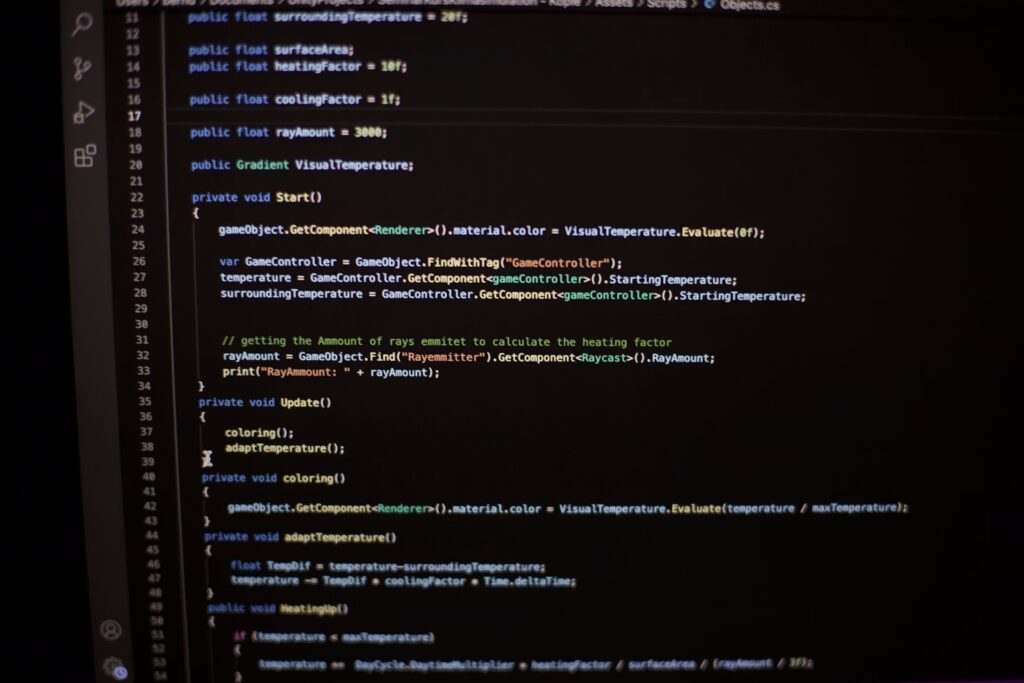
Featured image: Bernd Dittrich via Unsplash+