


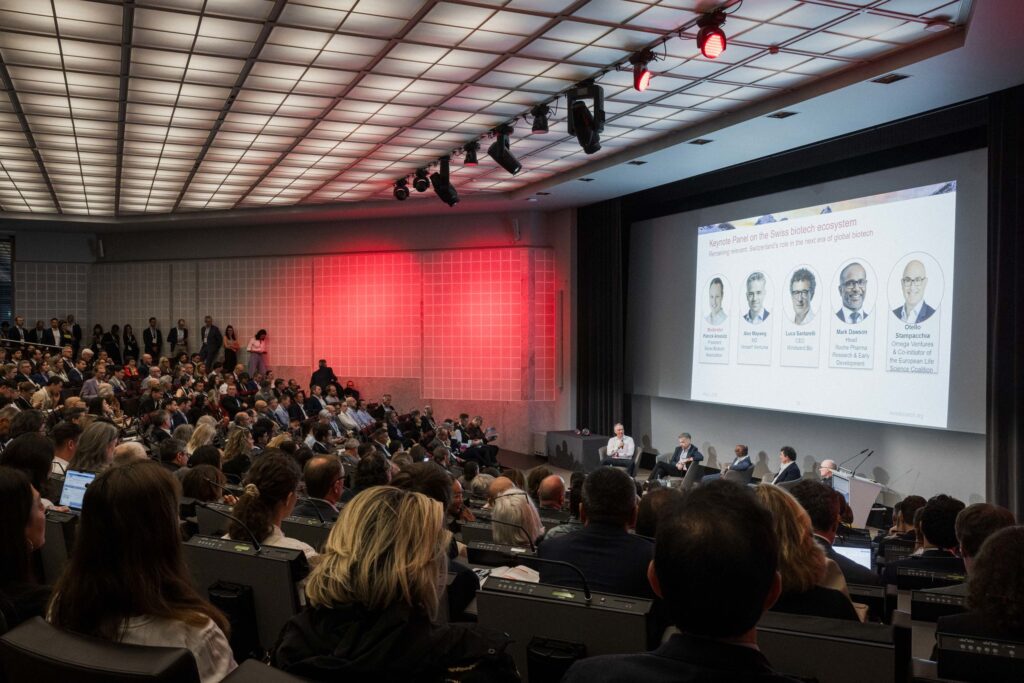
Basel, Switzerland – The Swiss biotech industry reached record revenues in 2025 and saw its highest funding for privately-financed companies, according to a report released Tuesday at a biotechnology conference in Basel.
The report by the Swiss Biotech Association, EY, and partner organizations noted the industry’s resilience as a difficult capital market environment challenged the biotech sector globally. Industry leaders cited an international talent pool and global collaboration as necessities for Switzerland’s success.
The industry’s performance last year is “an impressive achievement in the current economic and political climate,” Michael Altorfer, CEO of the Swiss Biotech Association, said in a statement. Most investment comes from abroad, he said.
Private Investors
The report found funding for Swiss biotechs increased slightly to CHF 2.6 billion ($3.32 billion USD) in 2025. Financing showed a shift from public to private.
Privately-funded companies raised CHF 1.15 billion ($1.47 billion USD), an increase of 38% over 2024.
“That’s nice evidence that the private investors are there, even in difficult times, to support Swiss biotech and not, again, being distracted or irritated by short-term cycles that may happen globally,” Frederik Schmachtenberg, partner and global life sciences lead for financial accounting advisory services at EY, said at a press conference.
Major private financing transactions included CHF 186 million ($238 million USD) by Windward Bio and CHF 104 million ($133 million USD) by GlycoEra. But despite the large amounts raised by some companies, other biotechs weren’t able to obtain financing last year, Schmachtenberg said.
“We sometimes refer to this as the tale of two cities,” he stressed.
The Swiss biotech industry reached record revenues of CHF 7.5 billion last year, the report said. Companies entering the commercial stage and an increasing demand for specialized development and manufacturing services helped drive the growth.
Global Industry
Speakers throughout the conference noted global uncertainties and the need to keep Switzerland’s biotech sector international. The country faces shifting tariffs by U.S. President Donald Trump and an upcoming vote by Swiss citizens on whether to cap immigration.
“Here in Basel, we are committed to our strong belief in free trade without tariffs, in free labor markets, in migration, knowing that a lot of innovation is coming from collaborating,” Kaspar Sutter, head of the Department of Economic, Social and Environmental Affairs for the Canton of Basel-Stadt, said at the opening of the conference.
Swiss citizens make up less than a third of the life sciences talent pool, the report added. And the small country lacks a domestic market, which means global collaboration is a requirement, Altorfer said at a press conference.
More than half of Switzerland’s exports came from the chemical, pharma, and life sciences industries last year.
“We are working in a global economy, and we are not about competition,” Altorfer said. “We are about trying to show to each other who is the best partner to work with because we cannot do it alone.”
Featured image: Swiss Biotech Association via LinkedIn