



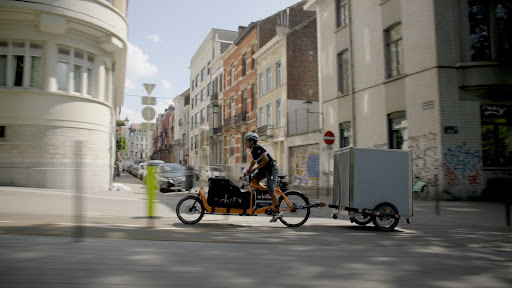
Cargo bikes can deliver twice as many parcels as vans in crowded city streets, at a tenth of the cost and with nearly no emissions. Yet, across major European cities, they account for only a fraction of deliveries. Why the gap?
150sec spoke with Nicolas Collignon, co-founder of Kale AI, an urban logistics startup that develops AI tools designed to help operators scale cleaner delivery models.
Kale AI was recently selected to coordinate the CARGOBIKE-SCALE project, which secured €1.6 million in funding from the EIT Urban Mobility, Europe’s innovation body for sustainable transport. As lead partner, Kale AI will work with a consortium of European businesses to bring cargo bike logistics to cities across the region.
The delivery dilemma
Last-mile delivery is one of the toughest challenges in modern logistics: how do you move more parcels, faster and with fewer emissions, through streets that weren’t built for today’s traffic?
Transportation is one of the most polluting sectors, accounting for more than 29% of total greenhouse gas emissions within the EU, while global e-commerce parcel volume reached 121 billion shipments in 2025 – growing 10% year over year.
For now, traditional diesel vehicles continue to dominate urban freight movement across Europe and beyond, with 80% of the global net increase in diesel use since 2000 coming from road freight. And yet, vans have proven to be inefficient in urban environments; drivers spend most of their time either stuck in traffic, circling for parking, or walking between addresses.
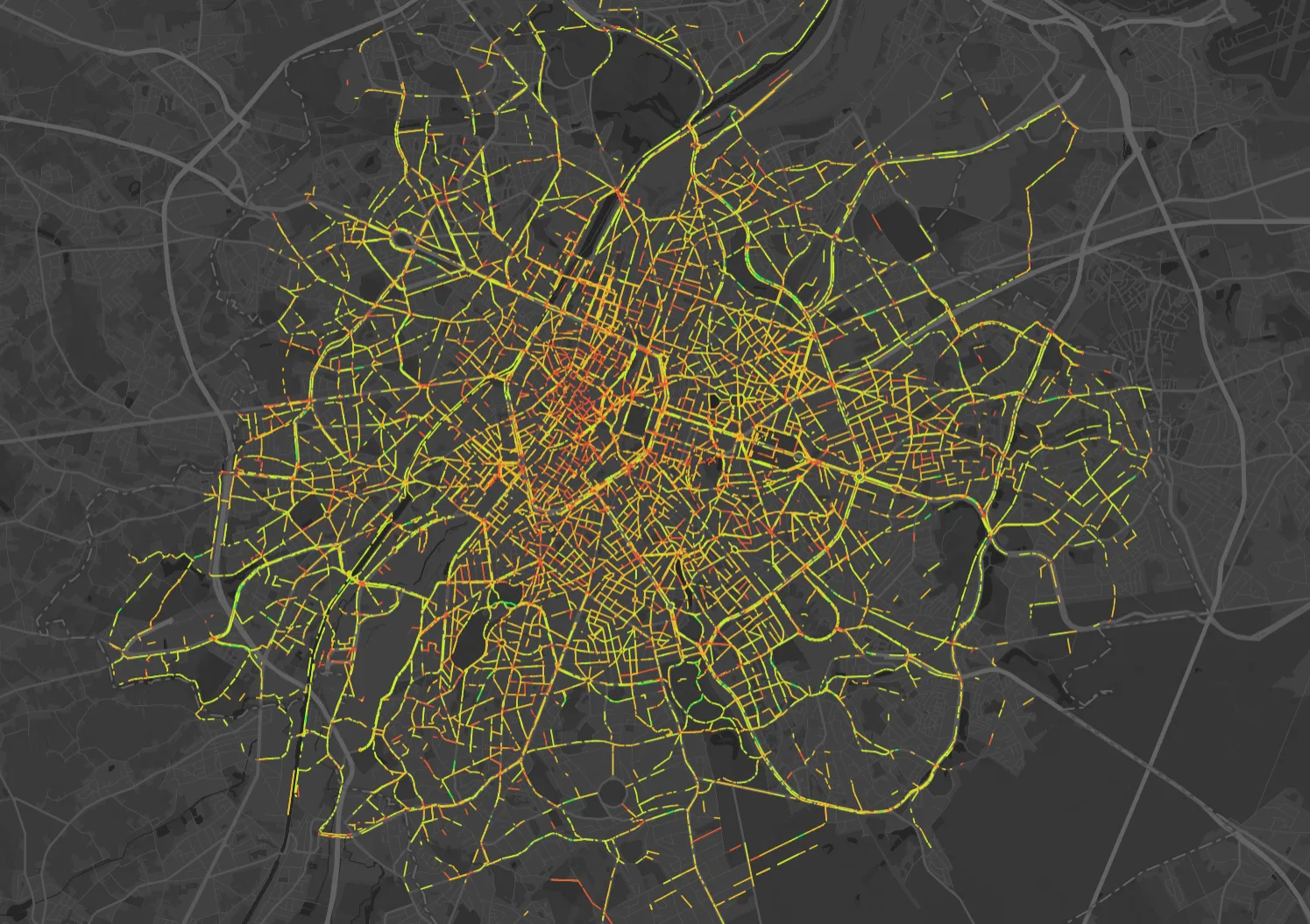
Light electric vehicles (LEVs) offer a compelling alternative. But, in spite of mounting evidence of their efficiency, companies still struggle to expand and scale the use.
This challenge is one Collignon experienced firsthand; after studying computational cognitive science, he worked in cargo bike logistics and saw the difficulties operators faced when adopting mixed fleets. Determined to address these barriers, he joined forces with cofounders Esben Sørig and Soonmyeong (Chris) Yoon to build a smarter way to scale cleaner logistics.
When logistics meets AI
The challenge isn’t just about choosing different vehicles; logistics operators tackle complex problems daily, from routing deliveries across a city to navigating congested and unpredictable traffic. Introducing LEVs adds a new layer of operational complexity, requiring entirely new delivery models and supporting infrastructure.
“The traditional model for urban logistics was to have a depot outside the city, load the vans once and divide the city in areas, and then run your delivery routes,” Collignon explained. “With LEVs, you need micro-hubs inside the city, LEVs return to the depot multiple times to reload throughout the day. It’s a completely different way of operating.”
New, unexpected factors also come into play, such as the steepness of certain routes.
Translating such real-world logistics factors into mathematical models is no simple task: “The traditional way of doing planning, where mathematical optimisation tools simplify a lot of assumptions, doesn’t work with the multitude of specific requirements or goals that dispatchers try to meet throughout the day,” said Collignon.
Currently, there’s a gap in the technology available to these businesses. 92% of people in the supply chain still rely on Excel despite paying for expensive planning systems, which is where Kale AI steps in.
Instead of relying on clunky spreadsheets, the startup uses machine learning to model how vehicles actually behave in cities, providing a better understanding of how they move and perform under real-world circumstances.
“Luckily, large language models are very good at translating specific problems into formal language, which means you can have mathematical models that actually correspond to what they’re trying to do,” Collignon added.
This AI infrastructure helps dispatchers apply their deep operational knowledge more effectively, enabling them to extend their expertise to larger and more complex operations.
From local success to European scale
This is not a solo effort. Kale AI draws on the expertise of a broad range of industry players, including vehicle manufacturers, maintenance networks, federations, specialised software providers, training programmes and operational experts.
As part of the initiative, Kale AI will partner with three pioneering cargo bike logistics operators in Belgium (Urbike), France (Cargonautes) and Spain (Bike Logic), as well as two academic research labs at ITU Copenhagen and the University of Westminster. Together, they plan to build AI-powered logistics platforms to roll out cargo bike networks across Europe.
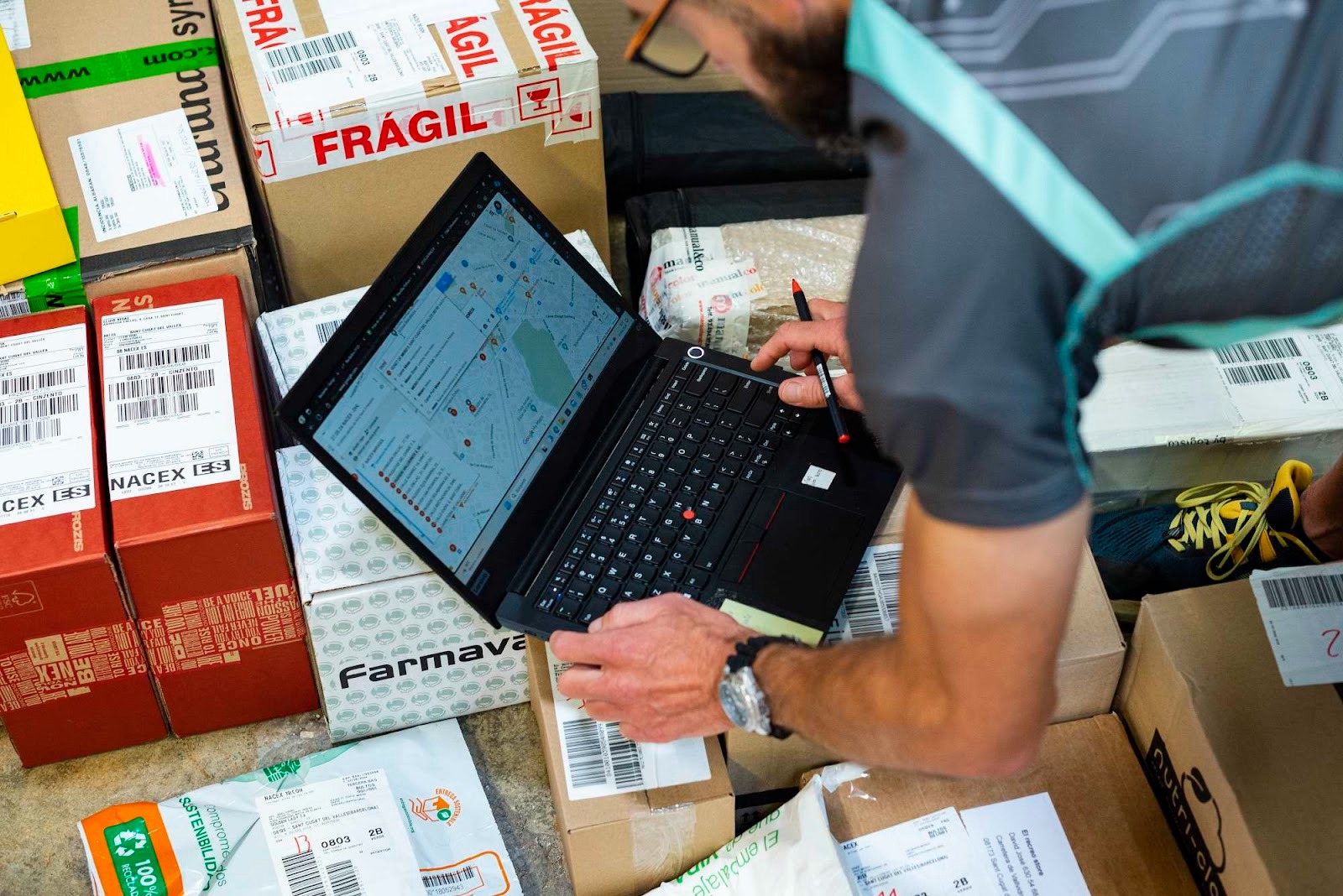
Each partner brings deep knowledge of the city they work in; what they now need are shared tools to implement and scale mixed fleets in as many locations as possible.
The project plans to develop and deploy an intelligence infrastructure that allows proven operational models to scale beyond individual cities. Operators will contribute practical, on-the-ground expertise; researchers will provide data and rigorous methodologies; and Kale AI’s technology will serve as a bridge between the two.
The goal is to reduce the risk associated with fleet transitions by using data-driven models to guide operators through the process. As Collignon put it, “Without data and information to support these transitions, it can feel like a leap of faith for operators.”
A turning point for urban delivery
The €1.6 million grant for CARGOBIKE-SCALE reflects a broader shift in urban mobility: as cities grapple with pollution and congestion, logistics operators are increasingly turning to zero-emission solutions to rethink the way goods move through our streets.
The transition to mixed fleets is gathering pace. “I think the evidence is now overwhelming, and the fact that the biggest players have fully committed now means we’ve crossed this psychological hurdle,” Collignon explained.
Some countries are already pushing the shift forward. In France, subsidies and incentives are supporting the cargo bike industry, while the national postal service has begun adopting LEVs at scale. Policies such as congestion charges, stricter parking rules, and delivery vehicle permits are helping narrow the gap between diesel vans and cleaner alternatives.
And, while cargo bikes may still account for a fraction of urban deliveries, as policy, operational models and technology begin to align, that gap looks increasingly short-lived. The question may no longer be whether cities can move beyond diesel-dominated last-mile delivery, but how quickly they are willing to make the shift.
Featured image: Courtesy of Kale AI.