

This past year, the EU economy outperformed many expectations.
Despite a year defined by global trade chaos, tariff wars, and geopolitical instability, the continent’s economy maintained modest growth, beat inflation down and avoided a recession that was on the cards for many nations at the start of last year.
Looking ahead, real GDP growth in the eurozone is projected to ease modestly from 1.3% in 2025 to 1.2% in 2026, before rising to 1.4% in 2027.
However, the burden of growing the economy against the odds looks to have fallen on the shoulders of the European workforce.
According to the State of the Global Workplace: 2025 Report by Gallup, Europe has the lowest regional percentage of engaged employees. Across Europe, employee engagement figures showed that only 13% were engaged, 73% were not engaged and 15% were actively disengaged.
In the past five years, the typical organisation has experienced disruption at every level, including post-pandemic retirements and turnover, a hiring boom and bust, digital transformation and AI tools and other factors.
These sweeping changes mean that creative new solutions are needed to tackle corporate engagement.
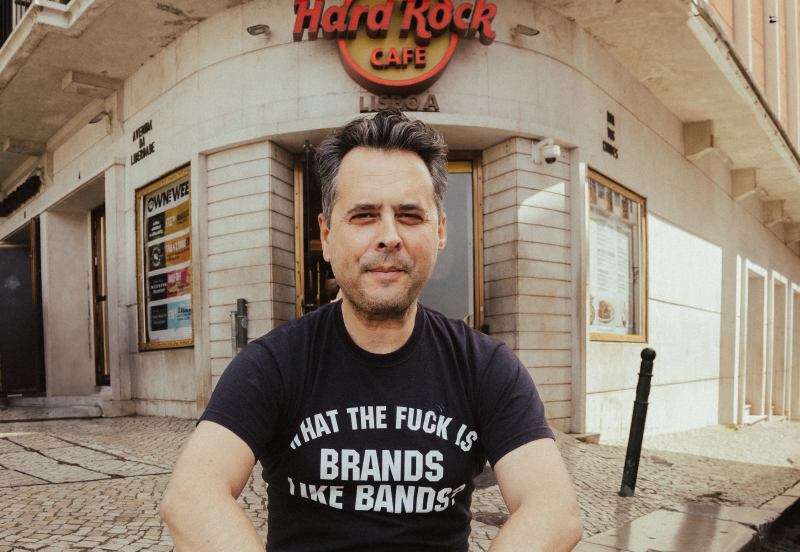
As traditional retention strategies lose their effectiveness, one company is on a mission to rewrite the rules of employee engagement for good. Brands Like Bands was established more than a decade ago by Portuguese founder, Fernando Gaspar Barros. The company’s unique approach has seen the team rise to work with some of the biggest global brands worldwide, rewriting the rules for corporate culture as a result.
An end to performative corporate culture
The latest figures from Gallup show that employee disengagement is a serious problem for Europe. However, the presence of trends like the Great Detachment points to a much more widespread issue. In short, the Great Detachment refers to an engagement crisis, caused by feelings of stagnation and disconnection at work and in some cases, significant budget cuts in training and development due to post-pandemic economic uncertainty.
However, for Fernando Gaspar Barros, the writing was on the wall many years prior to this most recent trend.
Barros created Brands Like Bands more than a decade ago to challenge the status quo and reject scripted, performative approaches to corporate culture for good.
In its place, Brands Like Bands has rewritten the playbook for company culture, championing a new approach that is human, emotional, and meaningful at its core.
This unique approach has delivered incredible results to date. According to Cision data, Brands Like Bands-led campaigns have generated more than €10 million in Advertising Value Equivalent (AVE). Participating organizations have also been repeatedly recognized as Best Places to Work, reinforcing the link between cultural authenticity and long-term brand value.
But how has Brand Like Brands achieved these impressive figures and grown the initiative from a standalone initiative to a global phenomenon?

Music, marketing & meaning
Fernando Gaspar Barros created Brands Like Bands back in 2008 based on the belief that music, marketing and meaning are the three interconnected elements that were the secret to creating a powerful corporate brand.
Industry statistics cite employee engagement as a key factor in employee satisfaction, retention, and even company profitability. Yet the ongoing challenges seen in employee engagement rates suggest that traditional methods no longer move the needle.
Barros leaned into this concept to rewrite the traditional corporate engagement playbooks and take lessons from the incredible loyalty that bands can generate across their global fanbase, taking inspiration from how artists build trust, loyalty, and identity with their audiences.
These key lessons have helped corporations authentically connect with their external audiences, whether these are customers or employees.
The rise of the corporate band
After the initial success seen at Brands like Bands from a branding perspective, Barros took the concept even further and launched the Brands Like Bands Festival in 2013.
This is the only festival in the world featuring bands formed within companies who play alongside some of the biggest global artists of our time.
With over 13 editions of the festival to date, employee bands from organizations such as L’Oréal, Siemens, Nokia, Axians, Schneider Electric, Ericsson, KLx – Crédit Agricole Groupe, Grünenthal and Leroy Merlin have taken the stage, not as a gimmick, but as a statement of culture, performing alongside internationally recognized artists such as Muse, Duran Duran, and Post Malone.
In 2026, the company is planning something even bigger – a multi-city global initiative that will see the festival head to São Paulo (Brazil), Lisbon & Porto (Portugal), Barcelona (Spain), Florence (Italy), London (UK), Berlin (Germany), before finishing in the European
Capital of Culture for 2026, Oulu (Finland).
Rather than following trends, the project grew by proving, year after year, that culture is not a campaign but something that must be lived, shared, and experienced.

Connecting culture with corporate success
Many corporate engagement initiatives fall flat. This is usually due to a failure to properly connect with audiences in an authentic manner. Barros has long believed that cultural initiatives are the way to do this, but he has helped corporate brands reimagine their corporate culture without appropriating the success of grassroots initiatives and creative artists.
Keen to give back to the community, the project has supported sustainability and cultural impact initiatives, including Patagonia’s 1% for the Planet. The company has also worked with artists globally recognized for their commitment to environmental and social causes such as Grammy award winners Green Day and Billie Eilish.
Barros also led a landmark and unique collaboration between Microsoft and Abbey Road Studios, the legendary home of The Beatles, in a project that sits at the intersection between technology, creativity, and cultural heritage.
From transforming the value generated by advertising campaigns to creating unprecedented levels of loyalty among consumers and employees, the approach from Brands Like Bands has shown the power of its formula over the past decade.
Uncertain times demand a creative approach
If we look back through history, people turn to music and culture during times of uncertainty.
During World War II, Glen Miller formed and led the U.S. Army Air Forces Band to create a restored morale, identity, and shared purpose among soldiers and civilians alike during this period of incredible global instability.
In 2026, the pressures that have caused the Great Detachment show that brands need to work harder to re-engage their audiences and give employees and customers a reason to be loyal to their company.
Brands Like Bands is helping to make this happen.